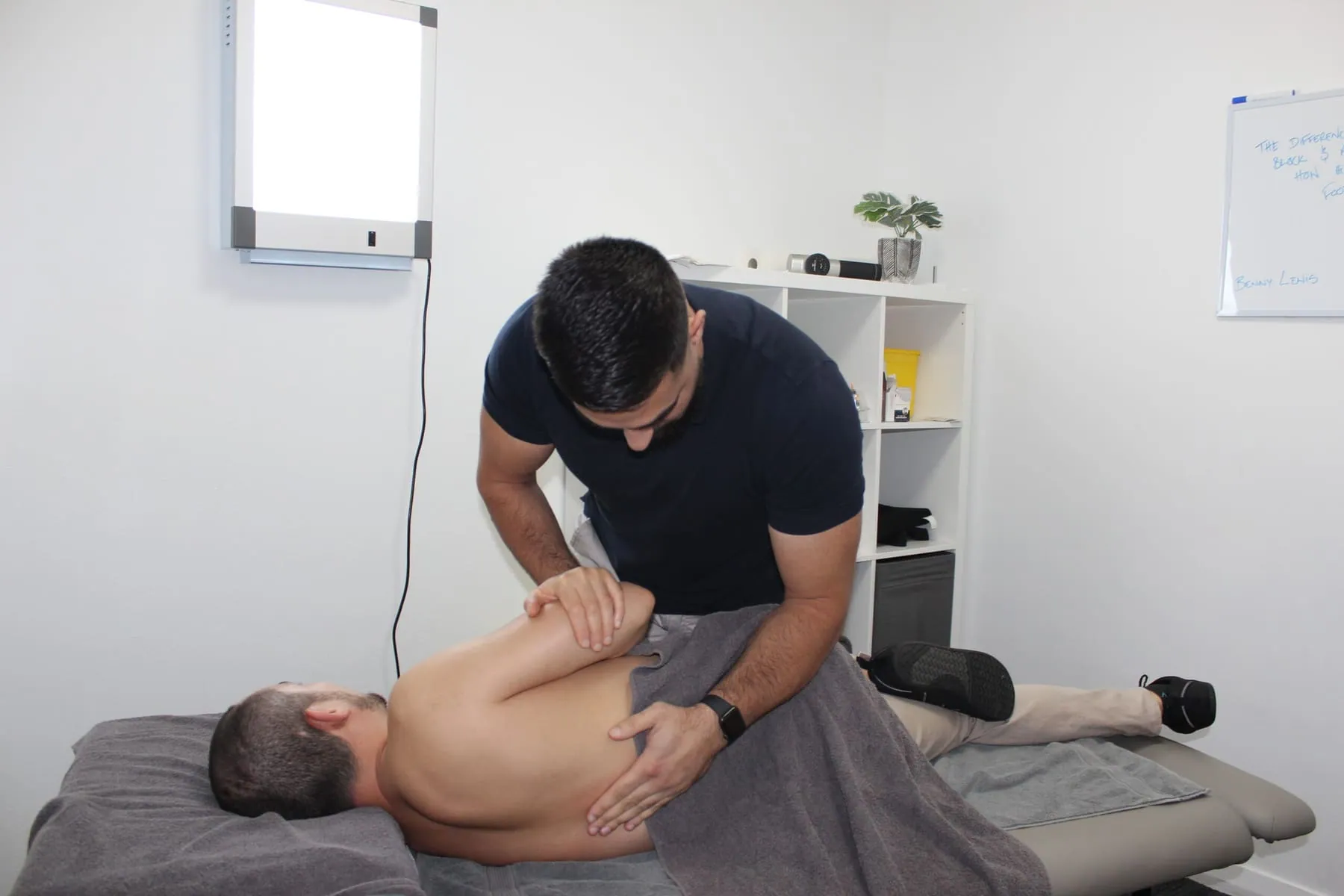
Myotherapy is a form of manual therapy focused on the assessment, treatment and management of pain caused by muscles and soft tissue. If you carry chronic tension, have a muscle that keeps tightening up, or you're recovering from an overuse or sports injury, myotherapy targets the muscle itself to release it and keep it released.
Your myotherapist starts with a proper assessment to find what's actually driving your pain — then combines hands-on techniques such as trigger point therapy, myofascial release, dry needling, cupping and corrective stretching to treat it. The aim isn't just short-term relief; it's to correct the underlying muscle dysfunction so the problem doesn't keep coming back.
What does a myotherapist do?
A myotherapist is trained to assess, treat and manage pain that stems from muscles and soft tissue. Your session starts with a proper assessment — your history, posture and how you move — to pinpoint which muscles are overloaded or referring pain. From there they treat it directly with hands-on techniques like trigger point therapy, myofascial release and deep-tissue work, add dry needling or cupping where it helps, and give you targeted stretches and exercises to hold the results between visits.
The benefits of myotherapy
The main benefit is lasting relief from stubborn muscle pain and tension — the kind that keeps returning no matter how much you stretch. By treating the underlying muscle dysfunction rather than just the sore spot, myotherapy can improve your range of motion and posture, ease tension headaches and jaw pain, speed up recovery from training and injury, and reduce how often the problem flares up.
Is myotherapy evidence-based?
Myotherapy draws on evidence-informed manual-therapy techniques — trigger point therapy, myofascial release, dry needling and corrective exercise — that are widely used to manage musculoskeletal pain. Just as importantly, your treatment isn't one-size-fits-all: it's guided by a thorough assessment and adjusted based on how your body actually responds, so you're always getting the approach that's working for you.
Myotherapy vs physiotherapy — which do you need?
The two overlap, and many people benefit from both. Myotherapy zeroes in on muscles and soft tissue — releasing tight, overloaded and painful muscles through hands-on work. Physiotherapy takes a broader view of movement, joints and rehabilitation, usually with more structured exercise prescription. If your problem is mainly muscular tension and trigger points, myotherapy is often the better fit; if it involves a joint, a recent injury or a longer rehab journey, physio may lead. Not sure? Book an assessment and we'll point you the right way.
Myotherapy also works well alongside our chiropractic and remedial massage care. You can also read our guide on what myotherapy is for more detail.
We're based in Prestons and care for clients across Liverpool, Casula, Edmondson Park, Hoxton Park and the wider South West Sydney area — open 7 days, no GP referral needed.